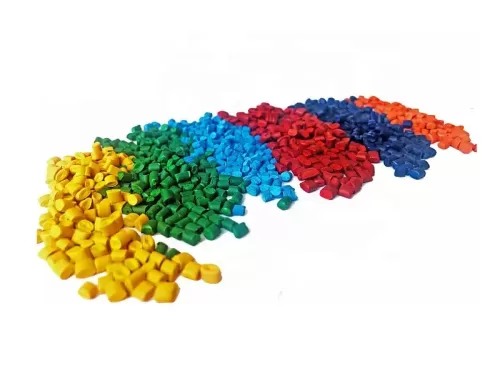
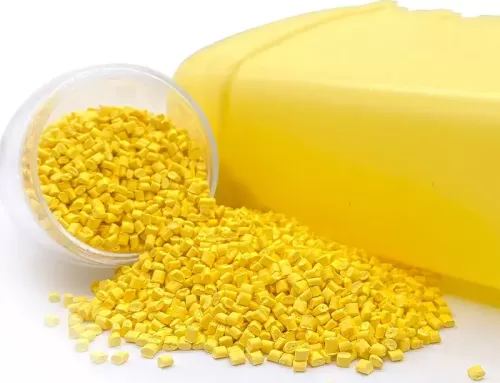
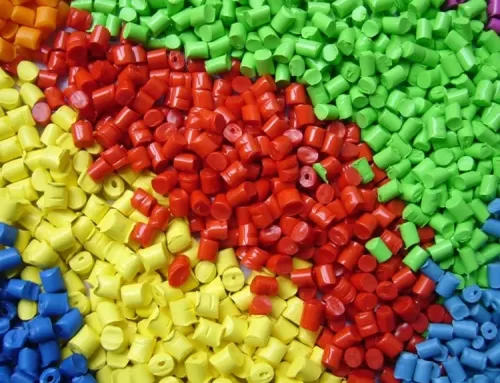
The small color dots appearing on ABS extruded sheets may be caused by incompatibility between the color masterbatch and the base material or poor dispersion of pigments. Here are some possible solutions:
Ensure full mixing: Ensure that the color masterbatch is fully mixed with the ABS base material during the production process. Use appropriate mixing equipment and process parameters, such as the temperature, speed, and barrel setting of the extruder, to ensure a uniform mixing and plasticizing process.
Choose high-quality color masterbatch: Ensure that the color masterbatch used has good dispersibility and compatibility. Choose high-quality masterbatches that have undergone rigorous testing and validation to ensure good dispersion and compatibility of pigments in ABS substrates.
Using dispersants: Adding an appropriate amount of dispersant to the color masterbatch can help improve the dispersibility of the pigment. Dispersants can help pigment particles disperse more evenly in the base material, reducing the formation of small color spots.
Adjust the extrusion process parameters: optimize the temperature and speed of the extrusion process to achieve better plasticization effect and pigment dispersion. Adjust the parameters of the extruder appropriately according to the actual situation to ensure full integration and mixing of the color masterbatch and the base material.
Quality control and testing: Establish a strict quality control system, including testing and testing the quality of raw materials, color masterbatch, and finished products. By monitoring and adjusting the parameters during the production process, ensure good compatibility between the color masterbatch and the base material and pigment dispersion.
In summary, by fully mixing, selecting high-quality masterbatch, using dispersants, adjusting process parameters, and strengthening quality control, you can solve the problem of small color spots on ABS extruded sheets. If the problem persists, it is recommended to further communicate and provide technical support with color masterbatch suppliers and extrusion equipment manufacturers to find a more suitable solution for your specific situation.
The causes and solutions of the problem are as follows:
The color dots may be caused by uneven dispersion. If the screw shear is too weak, it will cause a certain pigment in the color masterbatch to not disperse well. Therefore, equipment with stronger screw shear can be used; When using dispersants with good dispersibility, attention should also be paid to the amount of dispersants used, otherwise there may be material leakage; Adding some silicone based additives appropriately in the production process of color masterbatch can effectively improve the uniform dispersion of color powder, and easy to disperse dyes should be selected for color powder;
The carrier has poor fluidity. You can consider replacing the carrier resin by using a resin with a high melt flow rate as the carrier. You can use 50% ABS and 50% SAN (both powders) as the carrier, and add some lubricants (such as EBS). You can also use SAN to add some PE as the carrier;
There is a problem with the fluidity of titanium dioxide. Titanium dioxide can be made of rutile. It is also possible that the amount of TiO2 used in the formula is too high, causing impurities to be removed from the machine. Therefore, it is also necessary to ensure the cleanliness of the machine, and a filter screen can also be added to the mold head;
It is also possible that the raw materials are not well dried and bubbles are generated.