Color masterbatches have revolutionized the plastics industry by providing a convenient and efficient way to introduce vibrant and consistent colors to plastic products. This article delves into the history of color masterbatches and explores the intricate production process that has shaped their development over the years.
Historical Evolution of Color Masterbatches:
The concept of coloring plastics dates back to ancient civilizations, where natural pigments were used to create rudimentary colored plastic items. However, the development of color masterbatches as we know them today took shape in the mid-20th century.
Early Days: Pre-Masterbatch Era
Early attempts involved manually mixing color pigments with raw polymers, which often resulted in inconsistent coloration and poor dispersion.
The lack of uniformity and control led to the need for more efficient and reliable coloring methods.
Emergence of Masterbatches:
In the 1960s, the plastics industry witnessed the emergence of color masterbatches, which offered a breakthrough in color consistency and processing efficiency.
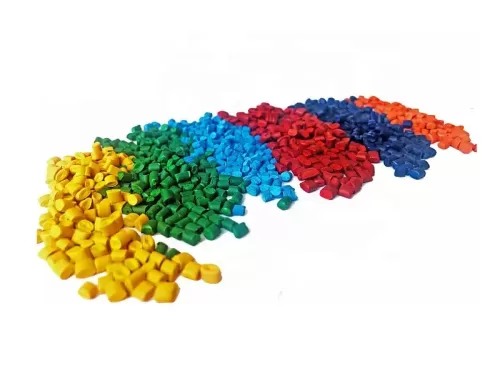
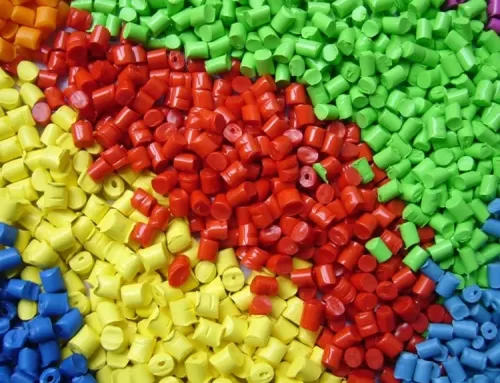
Masterbatches, comprising concentrated color pigments dispersed in a carrier resin, addressed the challenges of manual pigment dispersion.
Technological Advancements:
The 1970s and 1980s marked significant advancements in masterbatch technology, including improved pigment dispersion techniques and carrier resin compatibility.
Twin-screw extruders and specialized equipment allowed for precise mixing and dispersion, leading to high-quality masterbatches.
Modern Era:
The 21st century brought about further innovations, including the development of specialized masterbatches for specific applications, such as UV-stabilized, flame-retardant, and functional masterbatches.
Production Process of Color Masterbatches:
The production of color masterbatches involves a series of carefully controlled steps to achieve consistent color dispersion and quality. The process can be outlined as follows:
Pigment Selection:
Pigments are chosen based on color requirements, stability, and compatibility with the base polymer.
Pre-Dispersion:
Pigments are pre-dispersed to break down aggregates and enhance dispersion during extrusion.
Main Extrusion:
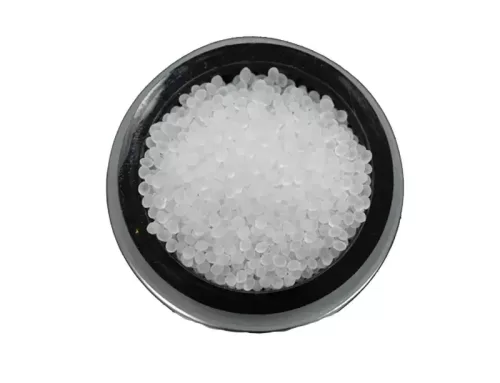
Pigment pre-dispersion is mixed with a carrier resin in an extruder, creating a homogeneous mixture.
Cooling and Pelletization:
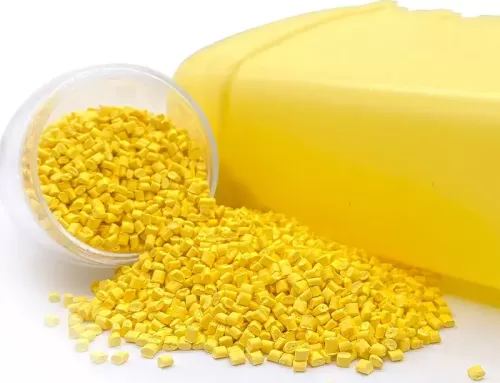
The molten mixture is cooled and solidified, resulting in colored strands that are then cut into uniform pellets.
Quality Control:
Quality control measures, including color consistency and dispersion analysis, ensure the masterbatch meets specifications.
Application-Specific Masterbatches:
Further processing may include adding functional additives or modifiers to create specialized masterbatches tailored to specific applications.
Conclusion:
The history of color masterbatches is a testament to the continuous innovation and evolution of the plastics industry. From manual pigment mixing to sophisticated extrusion processes, color masterbatches have come a long way in delivering consistent and vibrant colors to plastic products. As a color masterbatch manufacturer, understanding the historical journey and intricacies of the production process empowers us to provide high-quality and customized solutions that meet the diverse needs of our customers and contribute to the advancement of the plastics industry.