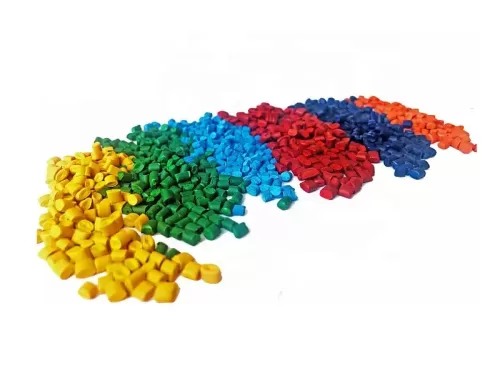
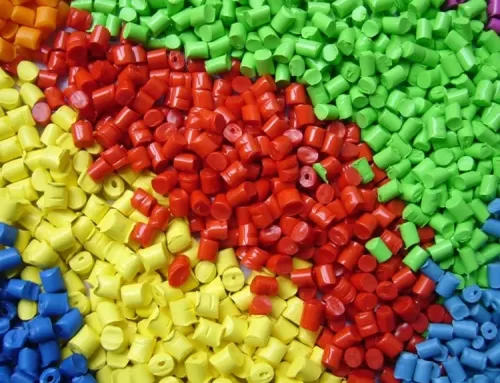
At present, it is understood that the domestic wire and cable market is developing rapidly, and the demand for PVC insulation and PVC sheathed wires in the market is increasing, and the requirements are getting higher and higher. Different users will propose different color standards for wires and cables (RAL , MUNSELL, REA, etc.), which puts higher requirements on PVC coloring for PVC wire and cable manufacturers. At present, the domestic production of PVC color masterbatch is only in its infancy. Masterbatch production and manufacturing put forward several experiences and opinions.
PVC resin is a heat-sensitive and shear-sensitive resin, and its application performance will be affected if it is subjected to “multiple processing” operations. Due to various reasons, it is often encountered that the product quality of “one-time processing” does not meet the requirements, and it has to be processed many times. In this way, it not only affects the production efficiency, increases the consumption of raw materials, and increases the production cost, but also may affect the intrinsic quality of the product.
Therefore, careful analysis of the causes of “multiple processing” operations, understanding of the main factors affecting the pass rate of “one-time processing”, and seeking ways to improve the pass rate of “one-time processing” are essential for the efficient, low-consumption and high-quality production of PVC cable colors. Masterbatch is of great significance.
The status quo of PVC cable masterbatch processing
There are many varieties of PVC cable masterbatches, complex components and different formulas. Some can be qualified after “one-time processing”, while others need to be processed several times to meet the requirements. Among them, the color pedigree is different, and the pass rate of “one-time processing” is very different. The relationship of pass rate is roughly as follows:
White > Gray > Yellow > Orange > Brown > Black > Blue > Green > Red.
Two common “processing” problems in the production of PVC cable masterbatch
If the “one-time processing” of PVC cable masterbatch is unqualified, the unqualified items mainly focus on the following items:
Poor grain shape
poor dispersion
color deviation
Among them, the unqualified “primary processing” caused by color deviation is mainly some problems in the formula, which is not in the scope of this article, because for a mature formula, the color should not be a problem.
The causes of poor particle shape, the classification and analysis of adverse conditions, the most common of which are the following three:
1. It is difficult to pull the extruded strips, sometimes thick and sometimes thin, and the grain shape is not good.
2. There are protrusions on the surface of the extruded strip.
3. The surface of the extrusion strip is extremely rough.
The first situation is mainly caused by the unstable feed rate of the extruder. Two situations are often encountered in production:
(1) The premix is agglomerated, which makes it difficult to feed the feeder or the agglomerated material is blocked at the feeding port of the extruder.
(2) The bulk density of the premix is too small, and the bottom of the hopper is agglomerated due to “air resistance” at the feeding port of the hopper, and the premix bridges in the hopper. In this way, the pressure of the melt in the head of the extruder fluctuates greatly, and the material flowing out of the die is very uneven. Of course, it is difficult to obtain a good particle shape.
The second situation usually occurs on products with relatively low hardness. After some “secondary processing”, the smoothness of the extruded strips has been significantly improved, but some products have not improved significantly. If its dispersibility is detected, it meets the requirements.
The third situation occurs in some products that use special plasticizers or certain pigments with particularly high content. At this time, the production status may be good, but the surface of the extruded strip is quite rough. Only after many times of processing, the extruded strip feels smooth and even.
As for the problem of poor dispersion, the simplest method can usually be used in production, that is, “secondary processing”.
3. Analysis of the main reasons affecting the qualified rate of “one-time processing”
There are quite a few factors that affect the “one-time processing” pass rate of PVC cable masterbatch products. For the convenience of analysis and comparison, the influence of the three controllable factors of people, material and environment and the objectively invariable factor of machine on the pass rate of “one-time processing” is not considered. Each product is also integrated from the processing conditions of multiple batches of production, which is representative to a certain extent. If it is analyzed from the perspective of formula, it will give us some enlightenment.
1. The influence of organic pigment content
If the color masterbatches are sorted in descending order according to the content of organic pigments and the number of processing times, it can be seen that when the content of organic pigments in the formula exceeds 2%, the qualified rate of “one-time processing” is only 25%; while the content of organic pigments is less than 2%. %, its “one-time processing” pass rate is as high as 80%. This shows that the level of organic pigment content has a decisive impact on the pass rate of “one-time processing”. And its critical concentration is about 2%. More than this value most of the “secondary processing”. One of the reasons is that the bulk density of organic pigments is small, the volume is large, and the specific gravity of the premix is light during processing, which often causes difficulties in “feeding” and affects extrusion operations; the second reason is that the dispersion of organic pigments is poor, and the higher the content The higher the concentration, the more difficult it is to disperse, resulting in poor dispersibility of the product.
2. Influence of Inorganic Pigment Content
Most PVC cables require good covering properties. In addition to using organic or inorganic pigments for coloring, an appropriate amount of titanium dioxide is usually added to improve covering properties. Statistics show that the content of inorganic pigments is different, which also has an impact on the qualified rate of “one-time processing”.
3. Influence of plasticizer species
Plasticizer is one of the main components of PVC cable color masterbatch. It affects the processability, heat resistance, cold resistance and softness of the product.
4. Effect of plasticizer content
Not only the type of plasticizer affects the pass rate, but even if the same plasticizer is used, because of the different dosage, it will also affect the “one-time processing” pass rate. If the weight ratio of resin and plasticizer is used as a parameter, When the ratio is less than 1, the qualified rate of “one-time processing” is obviously lower than that of the ratio greater than 1. Because when the amount of plasticizer increases, it will increase the difficulty of the premix operation, which will easily cause the premix to be “over wet” and agglomerate, which will block the feeding port during extrusion processing and affect the operation or the extruded strip will be too “Soft” makes pelletizing difficult.
5. Effect of filler content
Adding fillers to PVC cable masterbatch can not only reduce the product cost, but also improve the fluidity of the melt, which is beneficial to control the production process conditions and facilitate operation. However, its content should also be appropriate, otherwise it will also affect the pass rate of “one-time processing”. When the filler content is more than twice that of the resin, the “one-time processing” pass rate is less than 40%; if the content is 1-2 times that of the resin, the “one-time processing” pass rate reaches 75%. Because heavy calcium carbonate fillers have poor affinity with resin after all, if the content is high, the “one-time processing” may not achieve uniform distribution and dispersion in the melt, resulting in rough or bulged extruded strips a feeling of. After “secondary processing”, the strip is obviously smooth.
6. Effect of Hardness
The effect of hardness is more complex. Because the hardness is not an independent variable, it is governed by the resin preparation method, the type and amount of plasticizer, the type and amount of filler and pigment. However, looking at the situation encountered in production, experience tells us that we can consider that the hardness is high, and its “one-time processing” pass rate is also high. This may be because the hardness is high, which is conducive to the operation of the premix and improves the dispersion of the pigment. reason.
4. Methods and measures to improve the qualification rate of “one-time processing”
1. Improve the quality of premixes
A good premix should be evenly mixed, not agglomerated and relatively loose. Therefore, during premix operation:
Choose the right premixing equipment.
Properly select the weight of the premix.
Reasonably arrange the order of adding ingredients in the formula:
a First add resin, wax, lubricant, heat stabilizer, and pre-mix at high speed.
b plus anticipation, filler, high-speed premixing.
c Add rheology modifier and pre-mix at high speed.
d Add the plasticizer in one batch at the end and mix at low speed for a short time.
(4) The premix is best mixed and used immediately.
2. Adjust the bulk density of the premix.
The purpose is to reduce or eliminate the “air resistance” and bridging phenomenon at the feeding port of the premixed extruder. Possible methods such as:
From the formulation considerations:
In the case of the user’s permission, reduce the dilution ratio during use to reduce the content of organic toner in the masterbatch.
Re-color matching, choose organic pigments with higher color strength.
On the premise of ensuring the hardness, the content of active filler is increased and the amount of plasticizer is reduced.
When the hardness permits, try to add less plasticizer and more filler.
In higher hardness formulations, add little or no rheology modifier.
From the technical considerations
When premixing, add about 20% of the finished particles of the same variety and batch first, which can increase the proportion of the premix and facilitate the feeding operation.
3. Improve feeding metering capacity
If the width of the gate of the feeding meter is designed to be adjustable, that is, when producing PVC cable masterbatch, by adjusting the width and height of the gate, the feeding speed can be controlled more conveniently and accurately. For example, when the gate width is set to half of the original and the gate height remains unchanged, the control range of the feeding speed is doubled compared to the original one. In this way, it is possible to solve the feeding problem of “lighter” premixed materials, thereby improving the pass rate of “one-time processing”.
4. Optimizing Process Parameters
The important process parameters of extrusion operation are temperature (screw, barrel, die, die), feeding speed, screw speed, hole diameter and number of holes in the die plate, as well as melt temperature, torque and pressure. Different formulations should have their optimal operating parameters.
five. a few important suggestions
Improve the feeding metering device as soon as possible to solve the problem of uneven feeding speed
For the premix with light specific gravity, the premix process of “mixed particles” method is adopted
For those with high filler content, the “activation treatment” method is used to improve the surface roughness of the particles. There are two specific methods:
Filler online activation treatment method
That is, when premixing, the filler calcium carbonate is first added to the mixer, and then the coupling agent organic titanate or organosilane is added, and mixed at high speed for a few minutes to obtain the active filler, and then premixed according to the conventional process.
Common cable material quality issues that must be addressed
The wire and cable industry is a “heavy material but light industry” industry, and the material cost accounts for about 65% to 85% of the product cost. Therefore, selecting materials with a reasonable performance-price ratio and ensuring the quality of materials entering the factory is one of the important ways to reduce product costs and improve enterprise competitiveness.
Common material quality problems are as follows, please cooperate with material suppliers to improve:
1. Copper rod: Made of recycled miscellaneous copper, the surface is oxidized and discolored, the pulling force is not enough, and it is not round, etc. 2. PVC plastic: many impurities, unqualified thermal weight loss, pores in the extruded layer, difficult to plasticize, irregular color, etc. 3. XLPE insulating material: short anti-scorch time, easy early cross-linking, etc. 4. Silane cross-linking material: poor control of extrusion temperature, poor thermal elongation, rough surface, etc. 5. Copper strip: uneven thickness, oxidative discoloration, insufficient tension, ruffles, insufficient softening, hard, short ends, poor connection, paint film or zinc layer peeling off, etc. 6. Steel wire: the outer diameter is too large, the zinc layer falls off, the galvanizing is insufficient, the short ends are too many, and the pulling force is not enough. 7. PP filling rope: poor material, uneven diameter, poor connection and lumps, etc. 8. PE filling strip: hard, easy to break, and uneven curvature. 9. Non-woven fabrics: The actual thickness is not correct, the tension is not enough, and the width is sometimes uneven. 10.PVC tape: too thick, insufficient tension, many short ends, uneven thickness, etc. 11. Refractory mica tape: delamination, insufficient pulling force, stickiness, wrinkling of the reel, etc. 12. Non-alkali rock wool rope: uneven thickness, insufficient tension, many joints, easy to fall powder, etc. 13. Glass ribbon: thicker, silky, low weaving density, mixed with organic fibers, easy to tear, etc. 14. Halogen-free glue-coated flame-retardant tape: easy to break, wrinkle on the reel, snag, poor flame retardancy, smoke, etc. 15. Heat-shrinkable sealing caps: inaccurate specifications, poor material memory, long-term shrinkage, poor strength, etc.
Some material manufacturers one-sidedly pursue to reduce costs, or blindly cater to users’ requirements for lower prices, but shoddy and cut corners, resulting in material quality that does not meet the requirements for use, causing direct economic losses to wire and cable manufacturers, so returns, disputes, and refusal to pay often occur. make both parties unhappy. The correct attitude should be that the supply and demand sides reach a consensus, and jointly explore ways to reduce material costs without affecting product quality, for mutual benefit and common development.