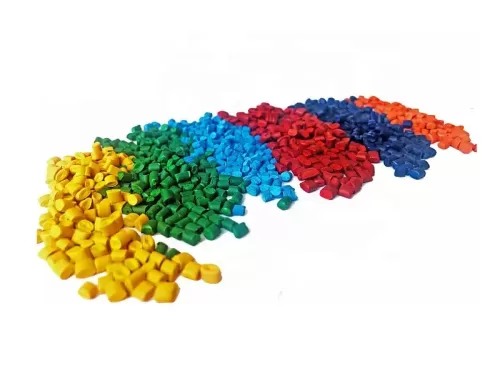
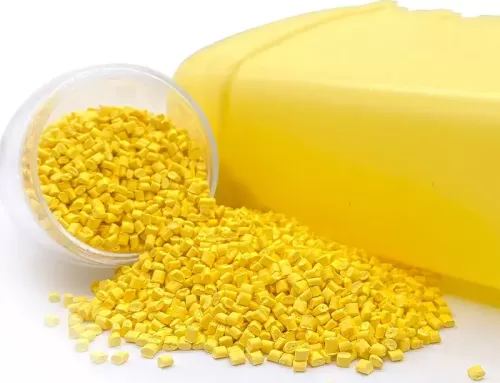
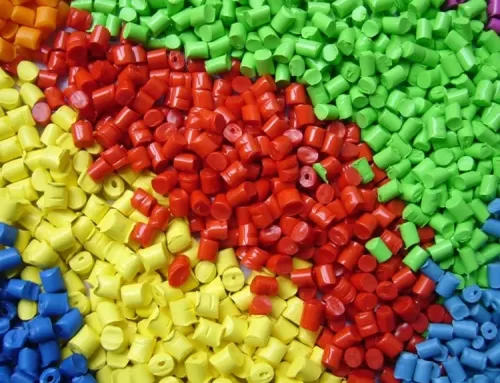
What are the requirements for the production of color masterbatches? This is a big question for many friends who have just started or want to work in the color masterbatch production industry. To explain this issue, let’s start with the requirements for the use of pigments in color masterbatches
1. Requirements for pigments used in color masterbatches
The color materials used in the color masterbatch must pay attention to the matching relationship between the color materials, plastic raw materials, and additives. The key selection points are as follows.
(1) Colorants cannot react with resins and various additives, and have strong solvent resistance, low migration, and good heat resistance. That is to say, the color masterbatch cannot participate in various chemical reactions. Carbon black can control the curing reaction of polyester plastic, so carbon black material cannot be added to polyester.
Due to the high molding and processing temperature of plastic products, the color should not decompose or change color under the heating temperature conditions. Generally, inorganic pigments have good heat resistance, while organic pigments and dyes have poor heat resistance. This should be given sufficient attention when selecting color varieties.
(2) The dispersion and coloring power of the pigment should be good. When the color dispersion is uneven, it will affect the appearance performance of the product; When the coloring power of the pigment is poor, it will increase the amount of pigment used and increase the material cost. The dispersibility and coloring power of the same color material in different resins are not the same, so attention should be paid to this when selecting color materials.
The particle size of a pigment is also related to its dispersibility. The smaller the particle size of the pigment, the better its dispersibility and strong coloring power.
(3) It is necessary to understand the other properties of pigments, such as for plastic products used in food and children’s toys, requiring the pigments to be non-toxic; For plastic products used in electrical appliances, color materials with good electrical insulation should be selected; For outdoor plastic products, colors with good weather aging resistance should be selected.
2. Production process of color masterbatch
The production process requirements for color masterbatch are very strict, usually using wet process. The color masterbatch is made by grinding, phase transformation, washing, drying, and granulation in water, in order to ensure the quality of the product.
In addition, while grinding the pigment, a series of tests should also be carried out, such as measuring the fineness of the sand grinding slurry, measuring the diffusion performance of the sand grinding slurry, measuring the solid content of the sand grinding slurry, and measuring the fineness of the color slurry.
There are four methods for the production process of color masterbatch:
2.1 Ink method
As the name suggests, it is the production method of ink color paste used in the production of color masterbatch, which involves coating a low molecular protective layer on the surface of the pigment through three roller grinding. The ground fine color paste is then mixed with the carrier resin, and then plasticized through a two roll plastic mixer (also known as a double roll open mill), and finally granulated through a single screw or double screw extruder.
2.2 Rinsing method
The pigment, water, and dispersant are sanded to reduce the particle size of the pigment to less than 1 μ m. And through the phase transfer method, the pigment is transferred into the oil phase, and then dried to obtain the color master batch. Organic solvents and corresponding solvent recovery devices are required for phase inversion.
2.3 pinch method
It is the process of mixing pigments with oily carriers and utilizing the lipophilic properties of pigments to wash them from the water phase into the oil phase through kneading. At the same time, the surface of the pigment is coated by an oily carrier, which disperses and stabilizes the pigment, preventing it from condensing.
2.4 Metal Soap Method
After grinding, the particle size of the pigment reaches 1 μ At a certain temperature, a soap solution is added to form a layer of saponification solution by uniformly wetting the surface layer of each pigment particle with the soap solution. When a metal salt solution is added, it reacts with the saponification layer on the surface of the pigment to form a protective layer of metal soap (magnesium stearate). This ensures that the finely ground pigment particles do not cause flocculation and protect a certain degree of fineness.
3. Precautions for using color masterbatch
- (1) After storing the color masterbatch for a period of time, it will absorb moisture, especially PET, ABS, PA, PC, etc. Therefore, it is necessary to dry it according to the same process as the original color batch and meet the water content requirements.
- (2) The use of color masterbatches to achieve the desired color must be very careful, as color differences and changes in color brightness often occur.
- (3) Color masterbatches and other additives may react, so be careful when using them.
- (4) Attention should be paid to the selection of dilution ratio for color masterbatches. Choosing a high dilution ratio results in lower production costs, but it is also limited by processing equipment.